Heritage consultant David Hicks brings us the stories behind some of East Lothian’s historic properties.
Can you imagine a troop of enemy tanks advancing across Luffness Golf Course? It is an odd thought today, but this was exactly what was being envisioned in May 1940. The coastline of East Lothian was considered a prime risk for an enemy landing and became a militarised zone with residents requiring a special pass to travel. The evidence for this time of crisis is everywhere in the county, but the utilitarian and hastily built structures are often hidden in plain sight.
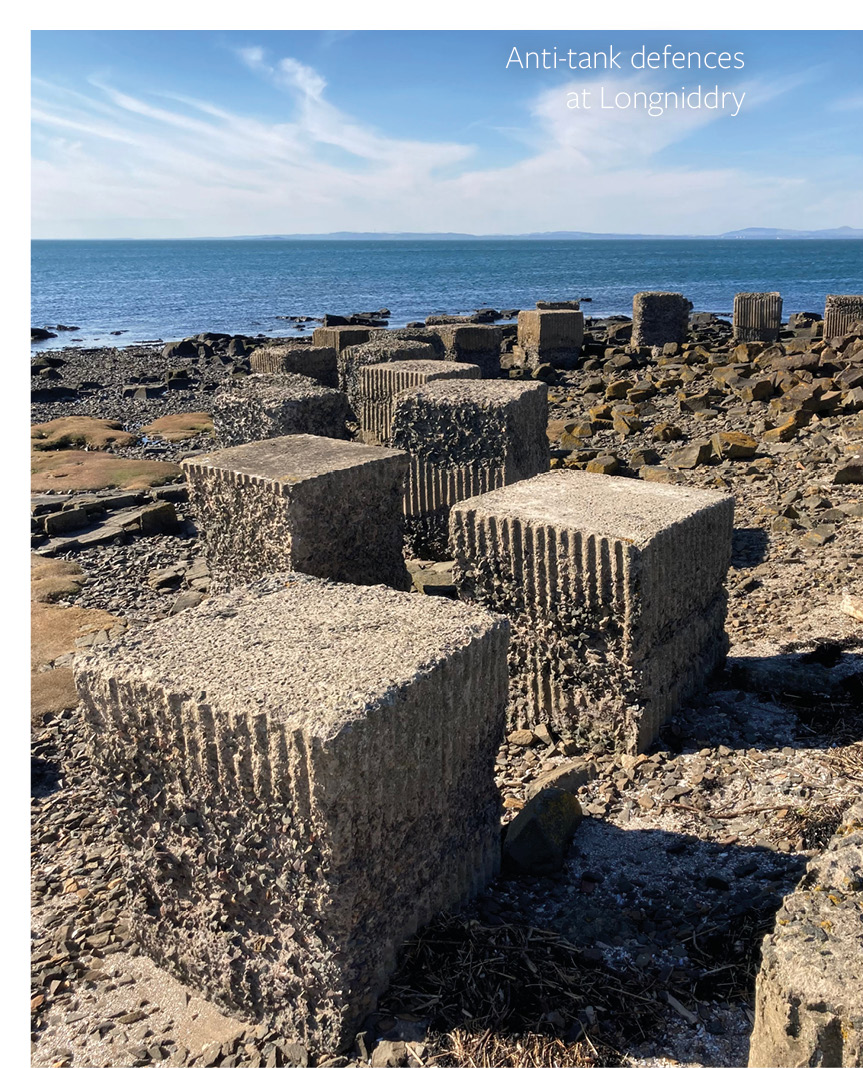
The splendidly named General Ironside took charge of planning anti-invasion defences in May 1940, intended to slow down an enemy attack. Traces of these ‘stop lines’ still litter the East Lothian coastline, like the lines of concrete anti-tank blocks still surviving at Longniddry Bents and on Gullane Point.
There were also pre-prepared roadblocks, and one still exists just off the road between Gullane and Aberlady, a concrete block with slots to fix a barrier in place. Sometimes, these had a ‘flame trap’, a reservoir of petrol which the Home Guard could ignite. It is easy to dismiss all this as something out of Dad’s Army, but there is a real sense of ruthlessness in much of these plans.
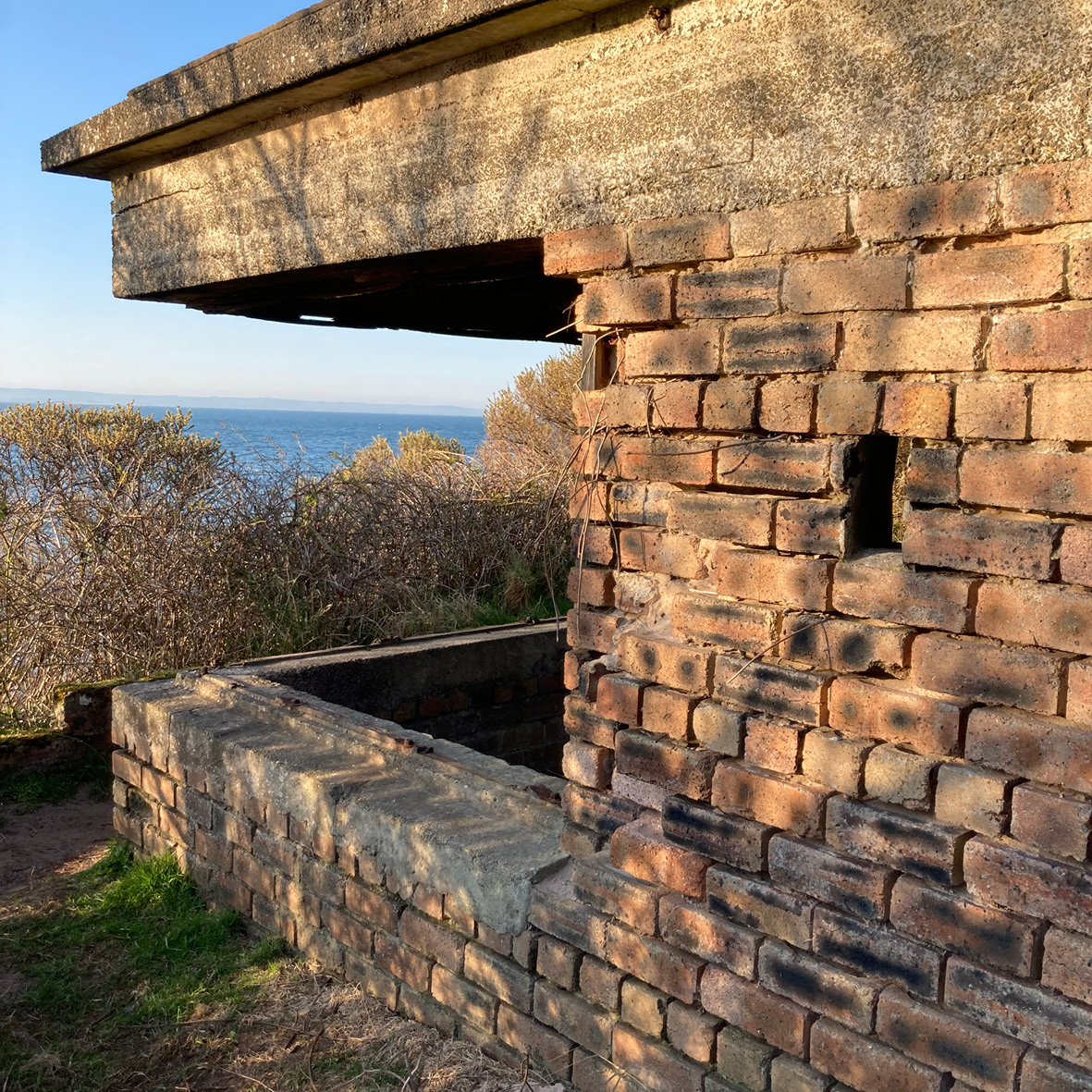
One surprised resident was given only 24 hours’ notice to leave his cottage on the Archerfield Estate. The site had been identified as the position for a battery to protect the approaches to the naval base at Rosyth. The guns are long gone, but the associated searchlight post still exists on the coastal footpath near Yellowcraigs.
There were also three airfields in East Lothian, at Drem, Macmerry, and East Fortune, now the Museum of Flight. RAF Drem was closed after the war, but there are still traces left. For example, the accommodation for the station’s Women’s Auxiliary Air Force personnel is now the shops and showrooms of Fenton Barns village.
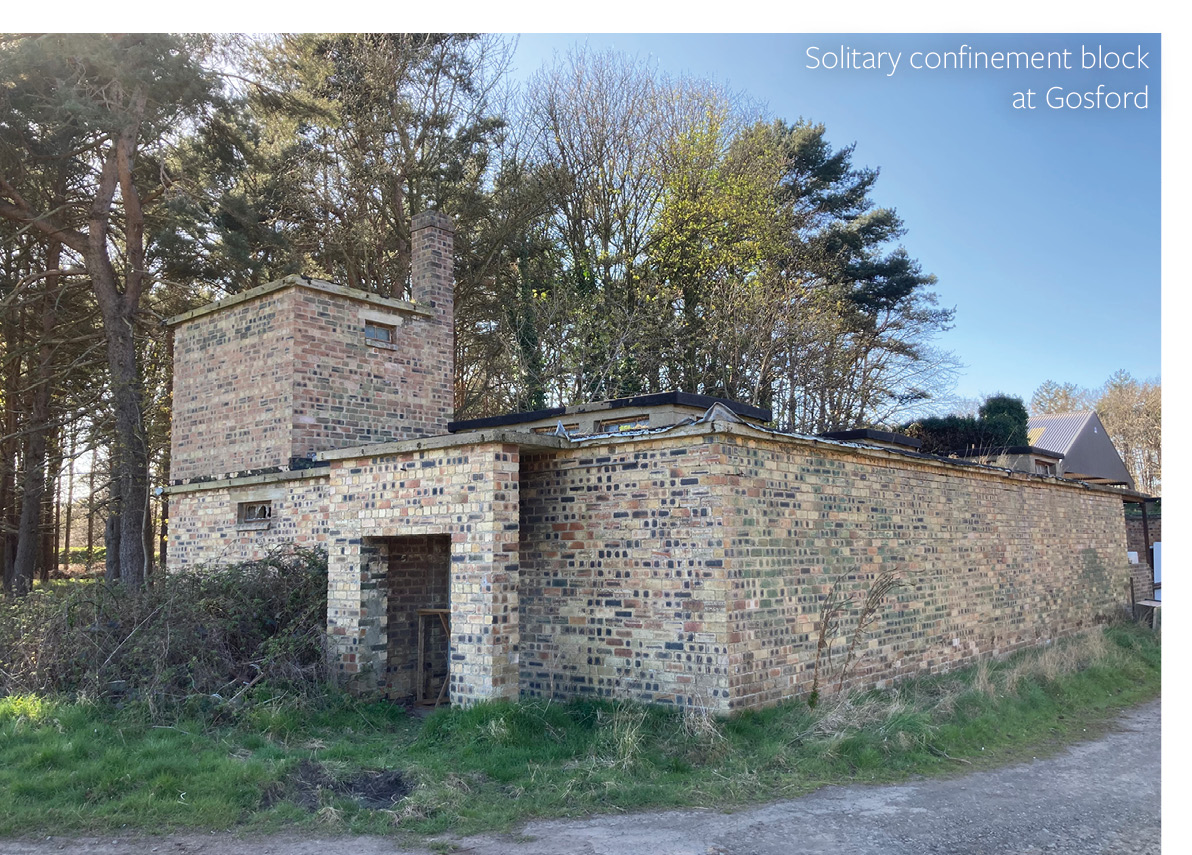
As the tide of war finally turned, East Lothian saw an influx of prisoners of war. The existing military camp on the Gosford estate was turned over to about 3,000 prisoners captured after the Normandy landings. Some camp buildings, such as the old solitary confinement block, still exist.
In contrast to these anonymous-looking buildings, the headstones in the little cemetery by Dirleton offer some names. Mostly pilots stationed at nearby Drem airfield, it is striking how many had come from across the Commonwealth to serve. In this, the anniversary year of the end of the Second World War, it is worth remembering and reflecting on the stories these relics can tell.